Monthly Archives: November 2014

Seville | Torre del Oro

This week we have another guest post from former Londoner, long-time Seville resident
and history buff Peter Tatford (aka Seville Concierge)

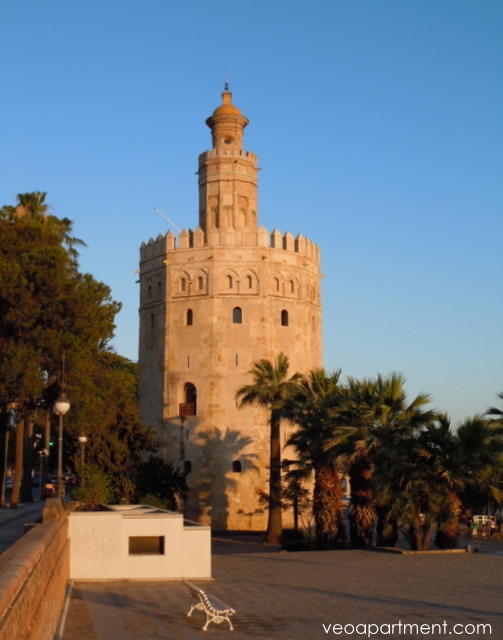
Although it’s not as grand as some of Seville’s other icons, such as the Cathedral, Alcázar or Plaza España, the Torre del Oro (Gold Tower) is still pretty impressive, and is in a very pretty location down by the river, making it one of Seville’s most popular spots.
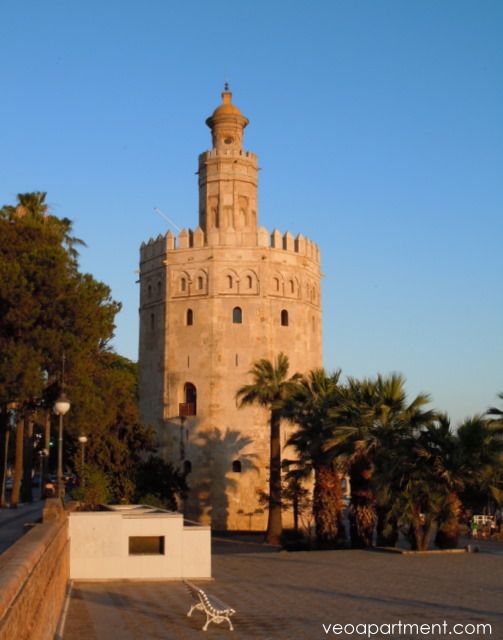
torre del oro

The tower has a long and chequered history, and there are lots of stories surrounding it, some true, and some not, despite having wide currency. It was built in around 1220 by the Almohads, the Moslem rulers of the city, to protect the river and docks from the threat of the Christian armies of Ferdinand III, who finally conquered the city in 1248). It was once thought that it served to anchor one end of a heavy chain that could be used to block the river, the other being a tower in Fortaleza (Fortress) street in Triana. The only chain mentioned in the historical records, however, was alongside the Bridge of Boats (Puente de Barcas) where the Isabella II bridge now stands, and the name Fortress street is 19th century – perhaps deriving from the story.
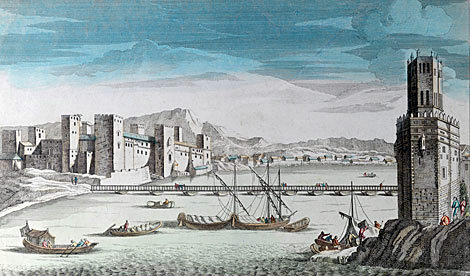
puente barcosBridge of Boats engraving courtesy of El Mundo

It took its name from its golden reflection on the water, a result of the materials from which it was constructed – a mixture of lime, mortar and pressed hay. You may hear that it was originally covered in gold tiles, but this comes from a much later account, and was certainly an invention. It is also sometimes said to have got its name from being used as a storehouse for gold coming from the Americas, but this is also not true, though it was used at various times as a chapel, a prison, and (with scant regard for historical heritage) a gunpowder store.

In 1755 the tower was damaged by the great Lisbon earthquake, and it was proposed to demolish it, but the people of Seville appealed to the king to save it. On the king’s orders the tower was repaired; at this time the stairway from ground level to the main door was removed (the current roadway did not exist at this time, and the ground on this side was at the same level as the river) and the third level round tower at the top was added. Access to the tower was by a walkway that extended from the city wall near the Torre del Plata. The remains of this walkway, and its alignment with the main entrance, can still be seen just inside the modern building opposite.

The tower survived another demolition proposal in 1868 (part of the general removal of the city walls that took place at this time), before becoming the Naval Museum in 1936, with further restoration work as recently as 2005 – 2008.
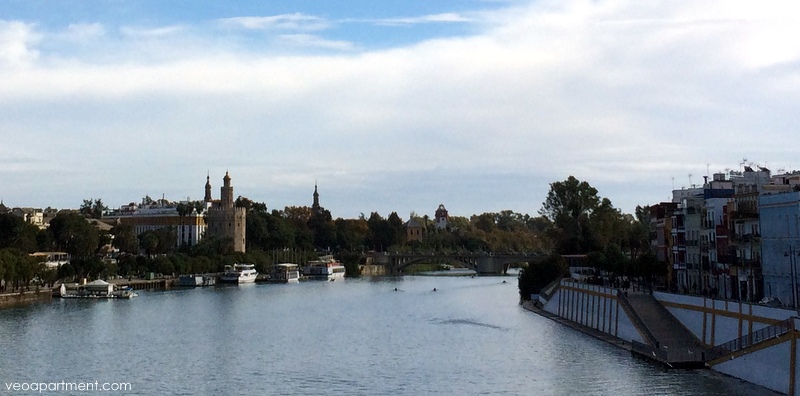
torre oro from bridgeTorre del Oro seen from the Isabel Bridge
(our Betis Blue apartments are on the far right)

It still houses the Naval Museum, which has some interesting maps and prints from the 16th century, model ships (including Columbus’s ship, the Santa Maria) and other artefacts and memorabilia. You can also climb to the top of the main section, which provides some great views along the river, and of the Cathedral. To the north the skyline is dominated by the new Torre Pelli, which sticks up like a sore thumb from the Cartuja.

The Arenal neighbourhood along the river between the tower and the Isabella II bridge is also home to the Bullring and shipyards, and lots of bars and restaurants, and being outside the heritage area offers good quality holiday rental accommodation at reasonable prices.

Naval Museum
Torre del Oro, Paseo de Cristóbal Colón, s/n
Tel: +34 954 222 419
Opening hours: Mon-Fri 9.30-18.45 Sat-Sun 10.30-18.45 Closed public holidays
Price: 3 euros students, pensioners and children 1.50 euros Mondays free
Website
Seville | Immaculate Conception Day and the Night of the Tunas

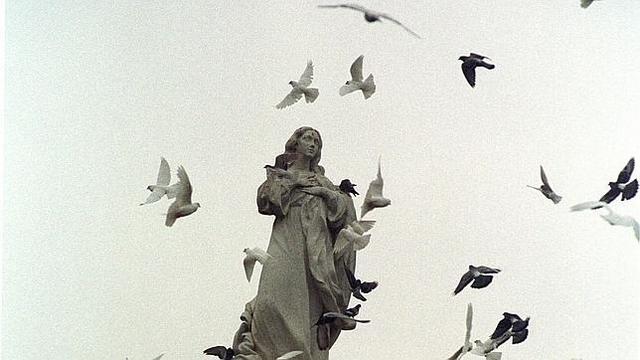
inmaculada abcphoto courtesy of ABC Sevilla

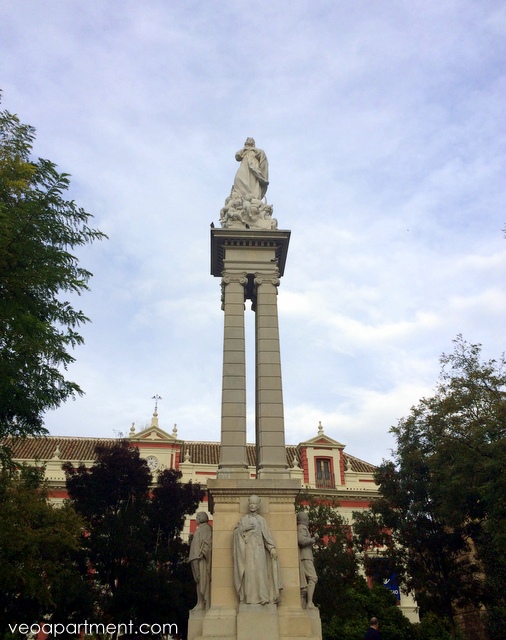
As in so many other places, Christmas in Seville seems to come earlier every year. The lights are switched on sooner, Christmas markets open earlier, and so on. In Seville, however, we do have an official start of the Christmas season, which helps to keep a check on the excesses. It’s the Day of the Immaculate Conception, celebrated as a public holiday on December 8. Not to be confused with the Virgin Birth, the Immaculate Conception refers to the protection of the Virgin Mary from original sin by God’s direct intervention at her conception. Although believed in by many from quite early times, it only became Catholic dogma in 1854, and in Seville it was naturally seized on as another opportunity for getting out in the street to celebrate. The monument to the Immaculate Conception of the Virgin in the Plaza del Triunfo was built in 1918, the four figures around the base (Juan de Pineda, Bartolomé Murillo, Miguel Cid and Martinez Montañés) were staunch propagandists for the doctrine.

inmaculada sevillastatue of the Inmaculada in Plaza Triunfo Seville
Nowadays the most popular and visible part of these celebrations is the “Night of the Tunas”. This has nothing to do with fish (in Spanish these are atún). Tunas are roving bands of musicians (usually attached to various faculties of the university) in “medieval” costume, who can often be seen plying their trade outside the bars for a free beer while they chat up girls, but on the evening of December 8 they congregate around the monument for a friendly competition to sing the praises of the Virgin. Considerable crowds gather in and around the square, and the singing and festivities can carry on until dawn.


[watch from 3:35 – 6:05 to see the tunas in front of the Inmaculada]

On the previous evening (December 7), there is a vigil for the Virgin in the Cathedral, and the day itself begins with a less well-known tradition, the Gozos (joys) de la Inmaculada, three bugle fanfares that are sounded from the belltower of the Antonio Abad church in Calle Alfonso XII, followed by a marching band procession to the monument and on to the Murillo Gardens.

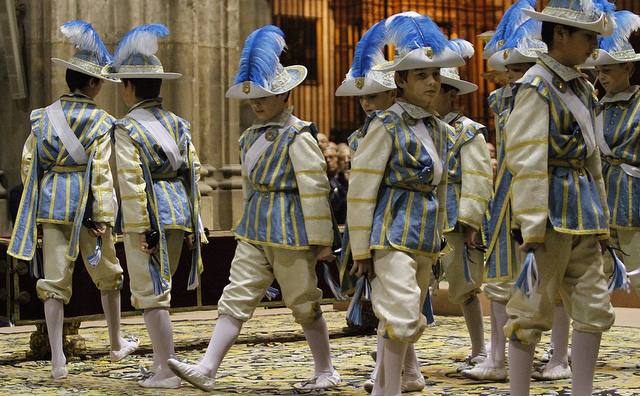
The main religious service in the Cathedral is held the following day, and includes the Dance of Los Seises (the choirboys) in front of the main altar, one of only three occasions each year when this is done. The choirboys (originally 6 of them, which is what gave the dance its name, but now 10) are dressed in medieval costumes, which because of a Papal edict can never be replaced, only repaired. The dance goes back to at least the 16th century, and probably longer, predating the Day of the Immaculate Conception.

_MG_8835.JPGLos Seises – photo courtesy of ABC Sevilla

If you’re in Seville The Night of the Tunas is a great excuse for staying up all night in the best Sevillano tradition, and after a day to recover, the serious business of Christmas can get under way in earnest.

If you’re thinking of taking a Christmas break in Seville why not try one of our  holiday apartments?

Seville | El Arenal neighbourhood

The Arenal neighbourhood of Seville is the southwestern part of the old centre, between the Avenida de la Constitución that runs in front of the Cathedral, and the River Guadalquivir. Its name is derived from the Spanish word for sand (arena), in this case the sand of the bullring, which is in this neighbourhood.

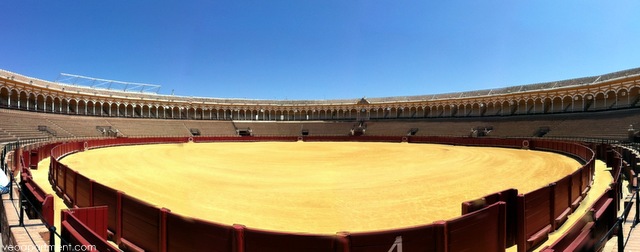
arenal (1)inside the Maestranza bullring

Crossing the Avenida at the corner of the cathedral takes you from the tourist district of Seville into an area with a quite different character. It was created by the extension of the city walls in the 10th century, some of which can still be seen around the Torre del Oro and the Torre del Plata (the gold and silver towers). During Seville’s golden age after the discovery of America it was the port area of the city, and even today it’s still a largely residential area. It was here that the treasures of the New World were unloaded, and from here that voyages of trade and discovery set sail.

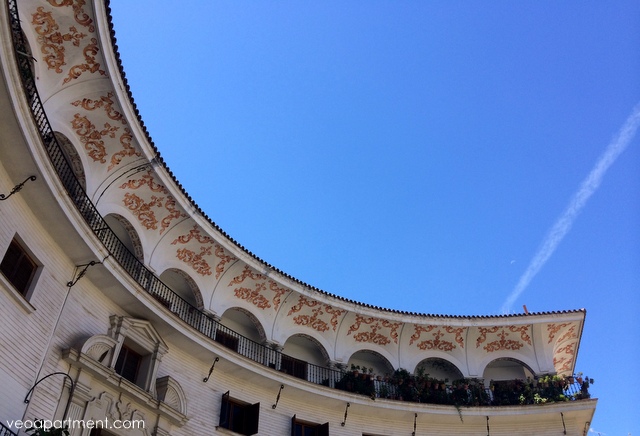
arenal (4)Plaza del Cabildo

For the sightseer the main things of interest cluster around the southern end of the neighbourhood. Start at the Plaza del Cabildo, which is reached by a short passageway directly opposite the main door of the Cathedral. It’s normally a quiet place, away from the busy main avenue, with a section of the old wall, a fountain, and a semi-circle of shops and apartments with splendid frescos along the eaves. On Sunday mornings there’s a little collectors’ market selling stamps, coins and other items. Look out for a little shop called El Torno, where they sell cakes and pastries made in the local convents. The name derives from the turntable that separated the nuns from the buyers of their goods.

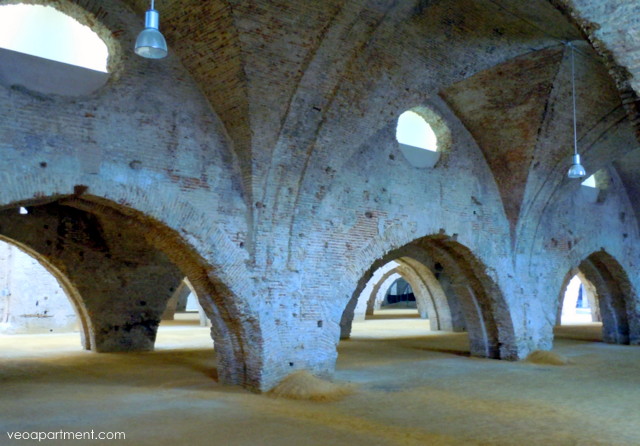
arenal (5)the Atarazanas

From there go through the Postigo del Aceite, the oil gate, into the riverside area. This is one of the few remaining city gates, and still has a little chapel just inside where you can give thanks or pray for good fortune as you enter or leave the city. To the right is a little artesan market for your souvenir shopping, and to the left are the Atarazanas, the 13th century dockyards. They’re not open to the public at the moment, but you can look in through one of the windows to see the visually stunning effect of its arched naves. If you’re lucky you may see storks nesting on the chimney above the building, something that always gives me a lift. Follow the building round and you’ll come to La Hospital de la Caridad, the charity hospital founded by Miguel de Mañara (sometimes said to be the model for Don Juan, though this is almost certainly not true). It’s still a working charity hospital but the splendid Baroque chapel is open to the public.

torre del oroTorre del Oro

Down by the river is one of Seville’s most famous and iconic buildings, the Torre del Oro, built in the early 13th century to protect the then Moorish city from the approaching Christians. In the 19th century it survived a couple of proposals for its demolition. It now houses a small naval museum with old maps and prints and model ships. You can also climb to the top for a view along the river, and to imagine what the area was like when it was the most important port in Europe.

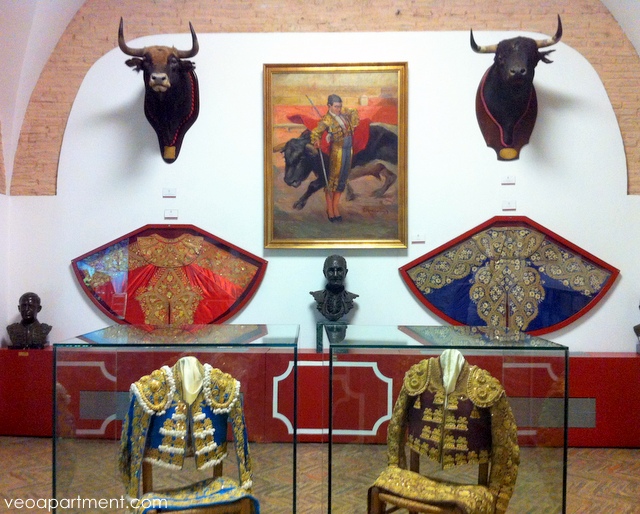
arenal (2)Bullring Museum

A little further along the river is the bullring, one of the two oldest in Spain. Bullfights (to the death) are still held here during the April fair and in September. Even if you choose (like me, I have to admit) not to see a fight, it’s still worth taking a guided tour to experience the atmosphere of the arena.

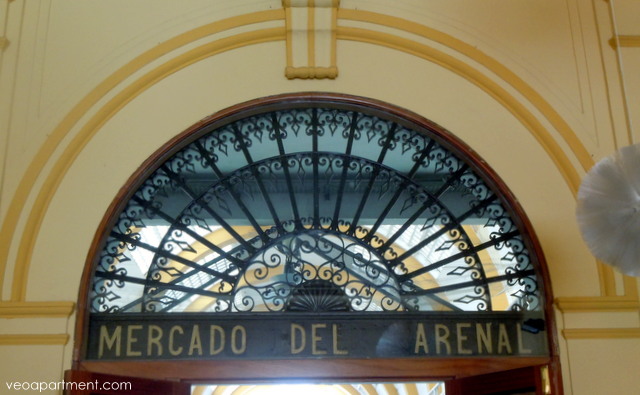
Nowadays one of the Arenal’s great pleasures is its profusion of excellent tapas bars, many of them, such as the Bodeguita Romero, Casa Morales or Casa Moreno, retaining their traditional ambience and cuisine, making it a great alternative to the more touristy Santa Cruz for a proper tapeo. For tapas with a more modern touch try La Brunilda. Also pay a visit to the Arenal market to see how the locals shop and buy a few supplies.

arenal (3)Entrance to the Arenal Market

Last but not least there are several places where you can see flamenco. For a show try the Arenal Tablao in Calle Rodo. For something less formal pay a visit to Casa Matías on Calle Arfe (contrary to your expectations it’s not open late at night – go between 7 – 10 pm for impromptu flamenco).

El Arenal’s location close to, but not in, the main monumental area, makes it a great neighbourhood to rent an apartment for your stay at a reasonable price.

Take our virtual tour of the El Arenal barrio.

Seville European Film Festival 2014


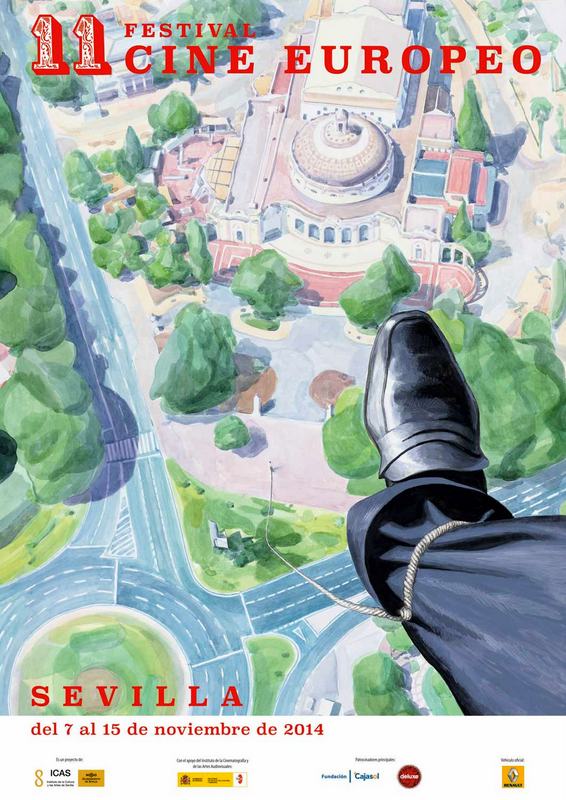
seff 14 cartel-001
painter Curro González evokes Fellini for this year’s edition of the SEFF

Friday November 7 sees the beginning of the 11th edition of the Sevilla European Film Festival, an annual celebration of the best of European cinema, which will run until November 15. It’s a meeting place for professionals from all parts of the industry – writers, critics, actors and producers – as well as for the public, who have an opportunity to see something of the film world in action away from its most commercial aspects, and to interact with film-makers in forums and round tables.

The core of the festival is the competitions for best films by categories. Most important is the official section award, the Gold Giraldillo, won last year by Alain Guiraudie’s Stranger by the Lake, but there also documentaries, short films and new-wave sections, among others, and awards for best actors, directors and scripts. Nominations for the European Film Academy Awards are also made during the festival. In addition there are lots of special screenings, retrospectives and tributes, and cinema for children and young people to foster both imagination and critical perception.

Principal venues are the Teatro Lope de Vega, Teatro Alameda, Cines Nervión Plaza and CineZona Sevilla Este, and the full program can be found here.

If you’re here for the whole week it’s well worth renting one of our apartments, and giving yourself a comfortable base for all your sightseeing and film-going.