Monthly Archives: September 2014

Cordoba | The Palacio de Viana

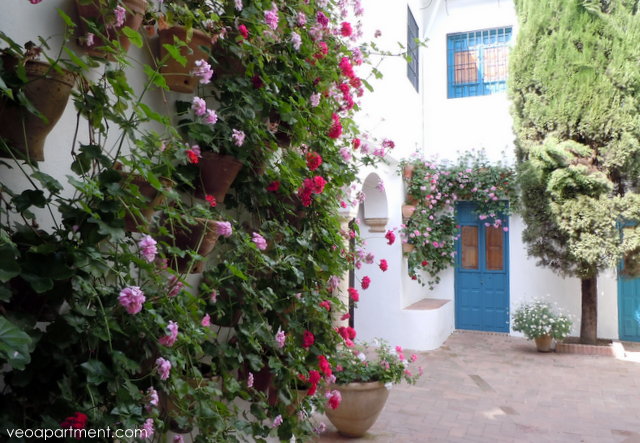
About an hour and a half away from Seville by train, Cordoba is one of Spain’s great old cities, once the capital of Moorish al-Andalus and regarded as one of the most enlightened, sophisticated cities of the European Middle Ages. It was a place where Moslems, Jews and Christians lived for the most part harmoniously, creating a cultured, intellectual life that was not to be equalled again for many centuries. It’s famous above all for the Mezquita, the Grand Mosque of the Caliphs of Cordoba, but away from the monumental area it is also a city for people, and one of its most captivating aspects is that it is a city of flowers.
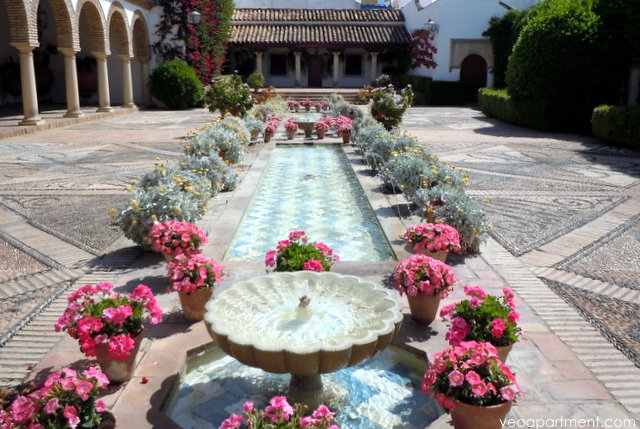
viana cordoba (3)

This is best shown by the festival of the Patios of Cordoba, which is held every May, when the private patios of many buildings, with their plants and fountains, are opened to the public, but streets adorned with the typical blue flower pots of the city are common all year round. In the spring and summer months they are alive with flowers and I love to visit the city at this time of year to enjoy its colours and smells.
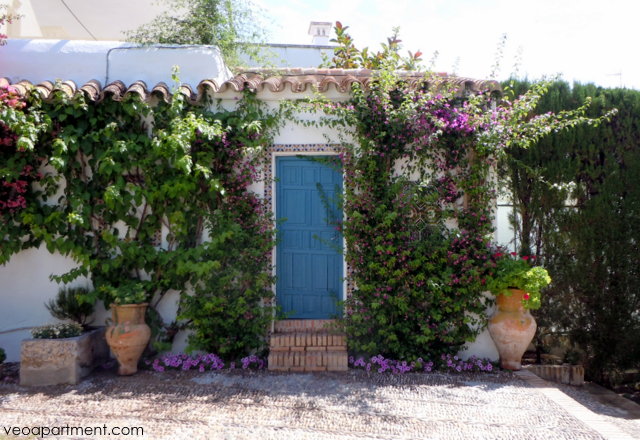
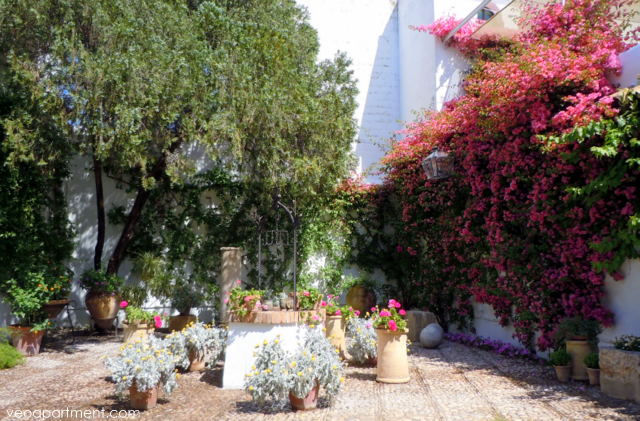
viana cordoba (5)

viana cordoba (4)

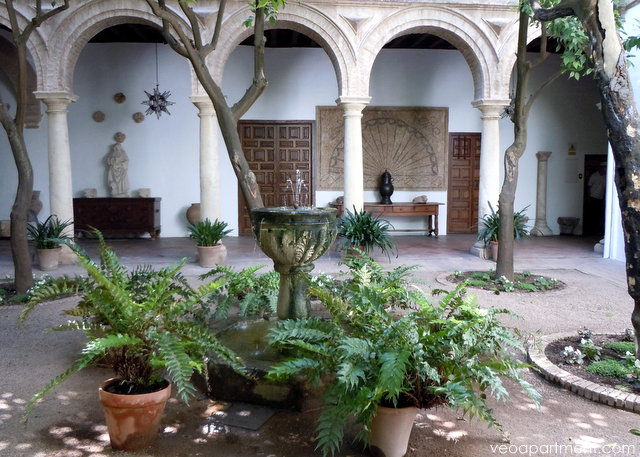
Not surprising, then, that one of my favourite places to go in Cordoba is the Palacio Viana, also known as the patio museum. Now about 500 years old, it originally belonged to the Marqueses de Villaseca, and acquired its modern name when it was bought by the Marquis of Viana in the late 19th century. It was eventually sold to the CajaSur foundation in 1982, and turned into a museum. From relatively small beginnings it has grown over the centuries by buying up surrounding properties, and now boasts no fewer than 12 patios, as well as the main garden.
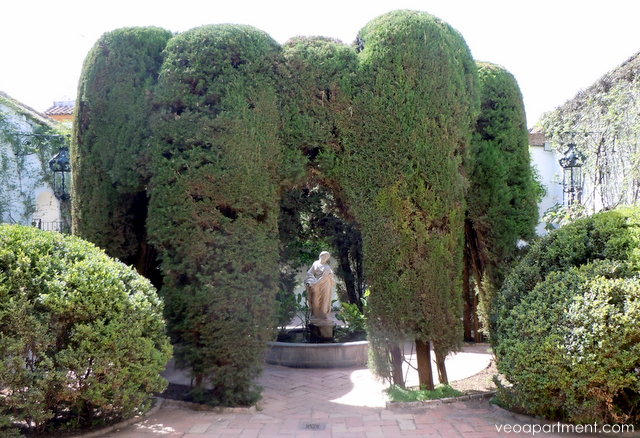
viana cordoba (2)

viana cordoba (6)

The modern grand entrance into the Patio de Recibo was built to impress visitors with the wealth and power of the owners, and features a colonnade around the perimeter. To one side is the carriage house, where you can see the Marquis’s carriage and (a personal favourite) a sedan chair, which looks really heavy for four men to carry! From here you go into the older parts of the palace. The little Patio de Los Gatos, or courtyard of the cats, will certainly charm you as it always charms me. In mediaeval times it was a Patio de Vecinos (neighbours), where the common people lived, and to one side is the palace kitchen of the early 20th century.
viana cordoba (1)

Beyond that are the Patio of the Oranges (a Moorish style garden), the Patio de las Rejas, which means bars or gratings, which gets its name from the bars that separate it from the street, and allowed those outside to look enviously at those inside, and the Patio de La Madama (the lady of the house), perhaps the most picturesque of all the courtyards.

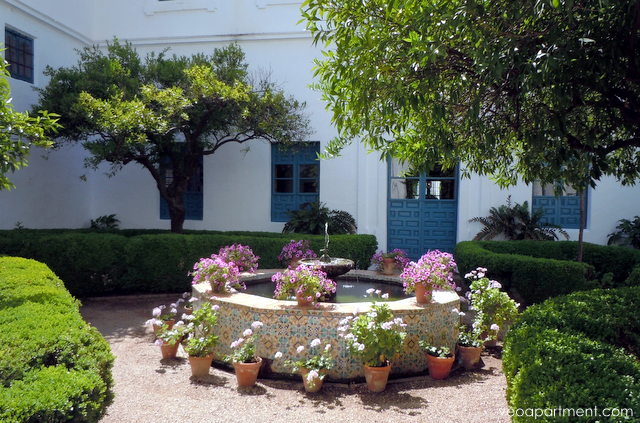
The two largest spaces come next. The Courtyard of the Columns is a modern addition, but its fountains blend harmoniously with the older elements. It is used for events such as concerts and theatre. Alongside is the garden, with a formal area of low, square hedges around a central fountain and a grand oak tree. The two interior patios, the Courtyard of the Chapel and the Courtyard of the Archives, are the quietest and most tranquil. Finally, you come to the courtyards where the gardeners worked, and stored their tools. These include the Courtyard of the Well, which was fed from an underground stream, and provided enough water for all the patios.
viana cordoba (7)

You can also take a guided tour of the inside of the palace, though admission is extra, and see the living quarters of the aristocratic owners and their collections of art and books, and other historical items.

Although it’s outside the main monumental area, I always try to make time to come here when I’m in Cordoba, and I think you should, too. I don’t know anywhere else that’s quite like it.

Palacio Museo de Viana
Plaza de don Gome, 2
Tel: 957 496 741
Tues-Sat 10.00 am to 7.00 pm Sundays 10.00am to 3.00 pm Closed Mon
July and August 9.00 am to 3.00 pm Closed Mon
Price 5 euros to the patios, 8 euros with entrance to the palace.
Website
Veoapartment Goes to the Beach

0666_virgen-del-mar-sea-views-apartment-terrace-rota-cadiz-23

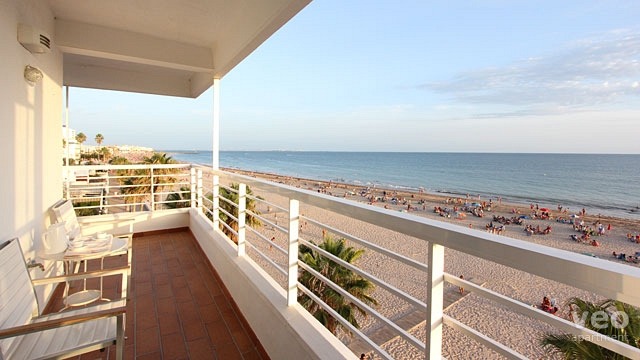
Over the last few years veoapartment has established a reputation as one of the leading holiday rental apartment providers for the major cities of Andalucia – Seville, Granada and Malaga. But now, for the first time, we are offering a superb beach front apartment for that perfect seaside holiday.

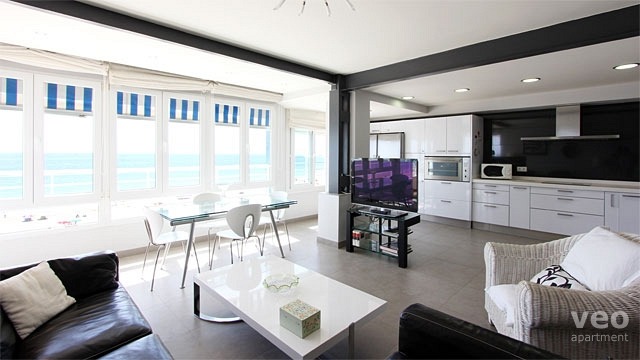
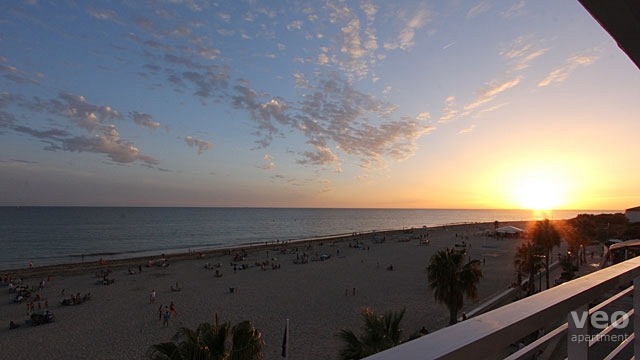
The Virgen del Mar Apartment is a fully equipped holiday home right on the beach in the resort town of Rota. With two bedrooms and two bathrooms it will accommodate four people in comfort. A large living-dining area with big picture windows that let in lots of light faces the beach, as does the L-shaped terrace, where you can enjoy a meal or a drink al fresco, or just enjoy the view across the bay to the ancient seaport of Cádiz.

0666_virgen-del-mar-sea-views-apartment-terrace-rota-cadiz-19enjoy sea views from the comfort of the spacious living room
Although Rota is primarily a seaside resort, famous for its long stretches of sandy beach, its history goes back to Phoenician times, and something of that past can still be experienced in Rota’s old town. The mediaeval Castillo de Luna (Castle of the Moon), which is now the town hall and tourist information office, is well worth a visit, as are a number of religious buildings, particularly the parish church of Nuestra Señora de la Expectación, the church of San Roque and the tower of the Convent of Merced (though the convent itself no longer exists). There’s a local museum, the Fundación Alcalde Zoilo Ruiz-Matos, and a botanical garden. Spend some time at the old Pesquero Astaroth fish market, and sample some of the local delicacies, such as Urta de la Roteña or Arranque Roteña (fish dishes made with freshly caught local fish), and the local red wine La Tintilla de Rota. For something more unusual the artificial fishing ponds of Los Corrales or the Bucarito pig and goat farm.

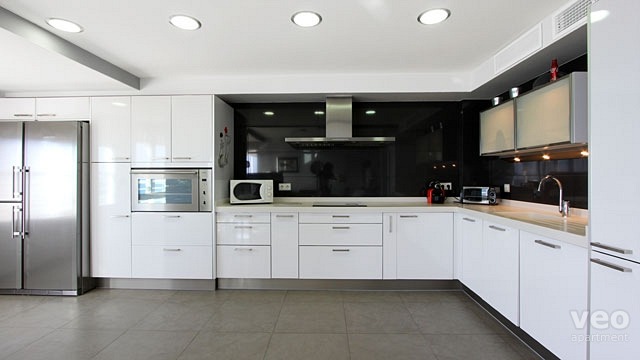
0666_virgen-del-mar-sea-views-apartment-terrace-rota-cadiz-20fully-equipped kitchen to prepare your market purchases
Rota also makes a great base for visiting other nearby towns and attractions. The three sherry towns of Jerez, Puerta de Santa Maria and Sanlúcar de Barrameda are all close by, and for anyone interested in wines a visit to at least one of the bodegas is an absolute must. They are fascinating places, full of the aromas of sherry and the sherry making tradition. All three towns have picturesque old centres where you can get lost in the winding streets and little squares. It’s also possible to take a catamaran ferry to Cádiz, and spend a day in this fascinating old city. My favourite places are the market, with its spectacular display of fresh fish, the old fortifications and the botanical gardens, though there’s lots more. Be sure to grab a coffee or a drink in the Cafe Royalty in Plaza Candelaria.

0666_virgen-del-mar-sea-views-apartment-terrace-rota-cadiz-25

On the other side of the River Guadalquivir from Sanlucar is the famous Doñana National Park, the oldest national park in Europe, and an area of great natural beauty with its sand dunes, lagoons and woods. Also nearby is the Cadiz bay nature reserve, an area of wetlands in the inner part of the Bay of Cadiz, a fascinating though rather desolate landscape of marshes and abandoned salt pans.

All in all, our Virgen del Mar apartment is a great location in any season to enjoy this very lively part of the the Costa de la Luz (coast of light).

Malaga | Alcazaba and Gibralfaro

This week we have another guest blog post by history buff, tour guide and long-time Seville resident Peter Tatford Seville Concierge. This time, Peter takes us to Malaga.

Malaga has long been one of my favourite Andalucian cities. It’s not just a place to pass through going to and from the airport, or a high-rise resort with so-so beaches. Though there is still an element of that, in recent decades the city has done a lot to change its image, and its heart is now very firmly in the right place, with a pedestrianised historic centre, a thriving food culture, some of the best parks and gardens I know of anywhere, a recently renovated harbour front with shops and restaurants, and loads of cool museums and art (from favourite son Picasso to the Contemporary Arts Centre).

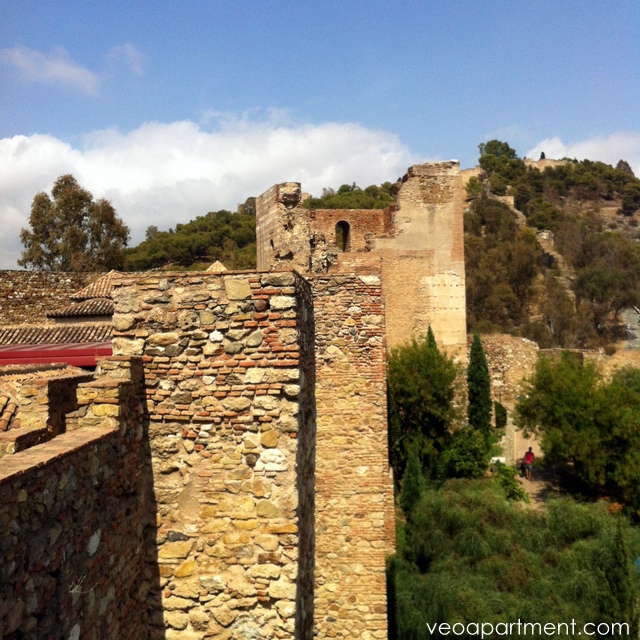
alcazabaat the top of the Alcazaba

For me, though, one of the most important things is that this is a city with history. Founded by the Phoenicians, and occupied by the Romans, its most impressive monuments date from the long Moorish period. From almost anywhere in the city you can see its two fortresses, the lower Alcazaba (from the Arabic al-qasbah, a citadel) and the upper Gibralfaro (gebel-faro, the rock of the lighthouse; Gibraltar, the rock of Tariq, has the same derivation). From below it can be seen to best advantage from alongside the Roman amphitheatre, itself rediscovered by accident in 1951 when the houses on the hillside below the castle were demolished to make way for a planned garden. Although the Alcazaba was also the palace and royal residence of the local kings, its primary role as a fortress is most obvious from here. There is an entrance to the castle here, but there is a second way in (all will be explained later) which avoids the steep climb up from the bottom.

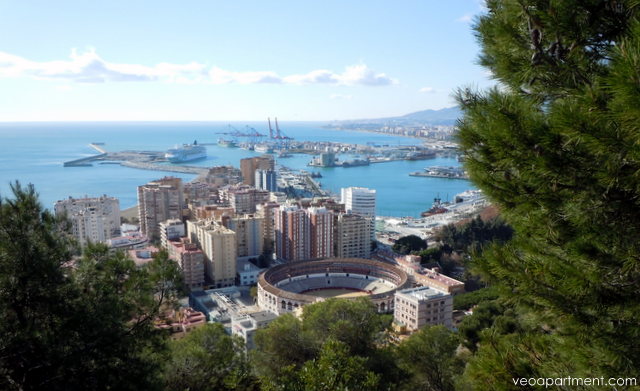
view from gibralfaroview of the port from the Gibralfaro

In the meantime, take a trip up to the top castle, the Gibralfaro. The Phoenicians had a lighthouse and fortified enclosure here, and the current Moorish building dates back to the 10th century, with a substantial rebuilding in the early 14th. Our tip for the Málaga novice is to avoid going up the steep path that connects the two castles, and instead to take a taxi, or a bus up the back of the hill, and walk down the path to the Alcazaba afterwards. One of the main reasons for coming up here, as you will see for yourself when you get there, is the magnificent view right across the city, from the bullring almost immediately below you, past the Alcazaba, Park Malaga and the harbour, to the mountains beyond. Enjoy it from the castle walls, the mirador (lookout) or best of all from the terrace of the Parador Hotel with a drink to go with it. It’s a magic moment.

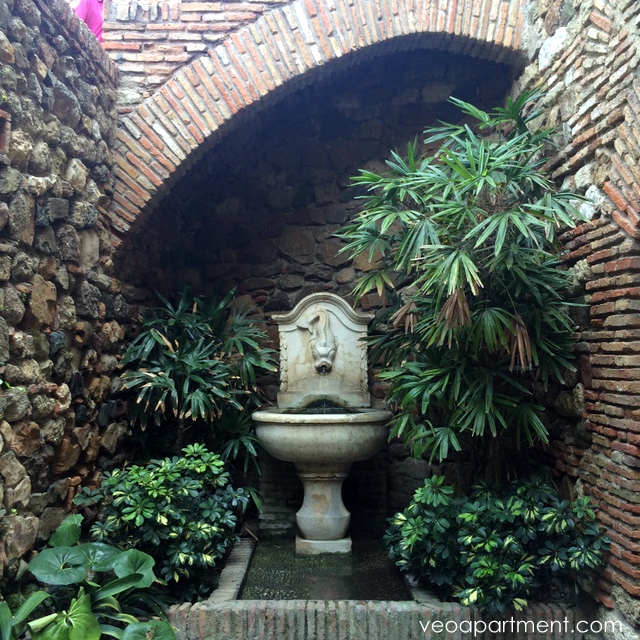
From there walk all the way down the hillside path to the bottom of the wall of the Alcazaba that faces the sea to find the alternative entrance. This is, in fact, a lift that takes you almost to the top of the centre of the fortress. It’s always my preferred option, particularly in summer, to be carried to the top of things, and only to walk downwards. During the period of the Córdoba Caliphate this hill had a modest fortification to protect the city from pirates. In the more troubled times that followed it, the local ruler built his residence and the double-walled castle enclosure that still exists today. It’s considered to be the best-preserved of all the Spanish alcazabas, and although much smaller than its counterparts in Granada and Seville, the central palace area with its courtyards, pools and gardens, still gives some idea of the high level of civilisation compared to most of the rest of Europe.

alcazaba (2)inside the Alcazaba

Walking along the old battlements it’s easy to see why the siege by the Christian armies leading up to its fall in 1487 was the longest of the entire reconquest period. The castle has endured ever since, surviving abandonment, neglect, and even being occupied as a tenement slum by the city’s poor before being carefully restored during the 1930s and 40s.

I think Malaga is one of those places that always seems to have another side of itself that it only reveals gradually, so it’s well worth renting an apartment and taking a few days to explore what’s on offer.

Seville | Bienal de Flamenco

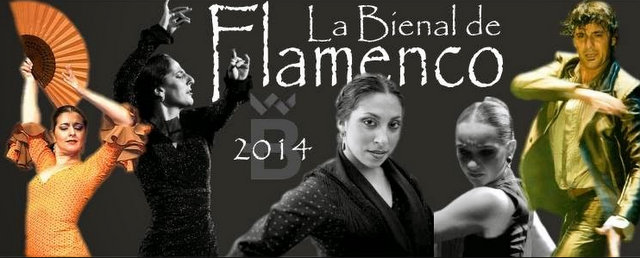
Flamenco is the traditional song, dance and music artform of Andalucia, which evolved from it’s gypsy and North African roots into something like its present form around the 17th century. If you’re into all things Flamenco, then for sure Seville is the place you want to be during the next five weeks. If you’re not, then come anyway, and you may well become a convert. From September 12 to October 15 the city is hosting the Bienal de Flamenco, the largest festival of flamenco in the world, and the city will be alive with the passions, sounds and rhythms of Spanish guitar and flamenco dance.

bienal flamenco 2014photo courtesy of the Bienal de Flamenco website

The slogan for this, the 18th edition of the festival which began in 1980, is fuente y caudal, source and flow, a reference to a 1973 album by the legendary Paco de Lucia. I have been lucky enough to have seen him play twice at previous bienals, and was looking forward to seeing him again this time around, but sadly it was not to be as he passed away suddenly earlier this year. A number of events have been planned as a homage to his memory, including a “We Play For Paco” event the day before the official opening, which will be held in Plaza San Francisco.

paco de luciaPaco de Lucía – photo courtesy of the Bienal de Flamenco website

Many of the big names in flamenco will be here, performing in the city’s major venues, such as the Espacio Santa Clara, the Alcázar Palace, the San Telmo Palace, and the city’s four main theatres, the Maestranza, Lope de Vega, Alameda and Central, but the Bienal is not just about big name performers. There will be dozens of rising talents and young hopefuls in the smaller theaters and clubs, and because flamenco is a tradition that develops, rather than being fixed and rigid, I’m expecting fringe and fusion styles of flamenco to be well represented.

In keeping with the theme of this year’s festival the official venues for street performances are clustered along the river, and around some of the city’s famous fountains, such as in the Puerta Jerez and Plaza de la Virgen de los Reyes, but as in previous years less formal shows may pop up almost anywhere in the city.

There will also be exhibitions of photographs and flamenco memorabilia, forums and other activities, including a special symposium on the life and work of Paco de Lucia.

Bienal de Flamenco 2014
September 12 – October 15
Official Programme